
Professional training and consulting in QMS, HSE, Lean & TQM Systems with Management & Personal Dev

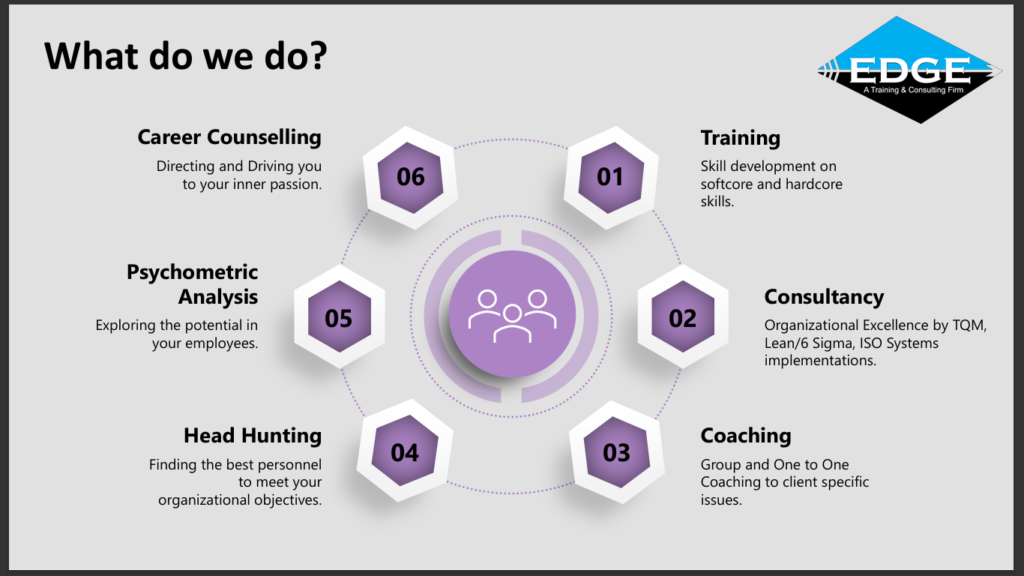
Training
Skill development on softcore and hardcore skills.

Consultancy
Organizational Excellence by TQM, Lean/6 Sigma, ISO Systems Implementations.

Coaching
Group and one to one Coaching to client specific issues.

Head Hunting
Finding the best personnel to meet your organizational objectives.

Psychometric Analysis
Exploring the potential in your employees.
Career Counselling
Directing and Driving you to your inner passion.

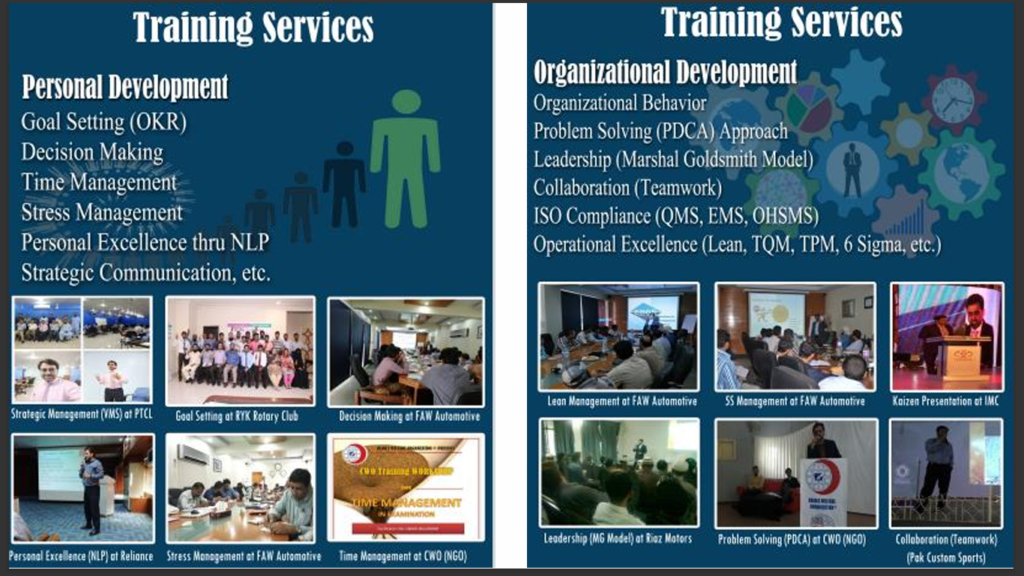
Training services
PERSONAL DEVELOPMENT
- 1 Goal Setting ( OKR)
- 2.Decision Making
- 3.Time Management
- 4.Stress Management
- 5.Personal Excellence through NLP
- 6.Strategic Communication,etc.
ORGANIZATIONAL DEVELOPMENT
- 7.Organizational Behavior
- 8.Problem Solving (PDCA) Approach
- 9.Leadership (Maeshal Goldsmith Model)
- 10.Collaboration (Teamwork)
- 11.ISO Compliance (QMS, EMS, OHSMS)
- 12.Operational Excellence (Lean, TQM, TPM, 6 Sigma, etc.)
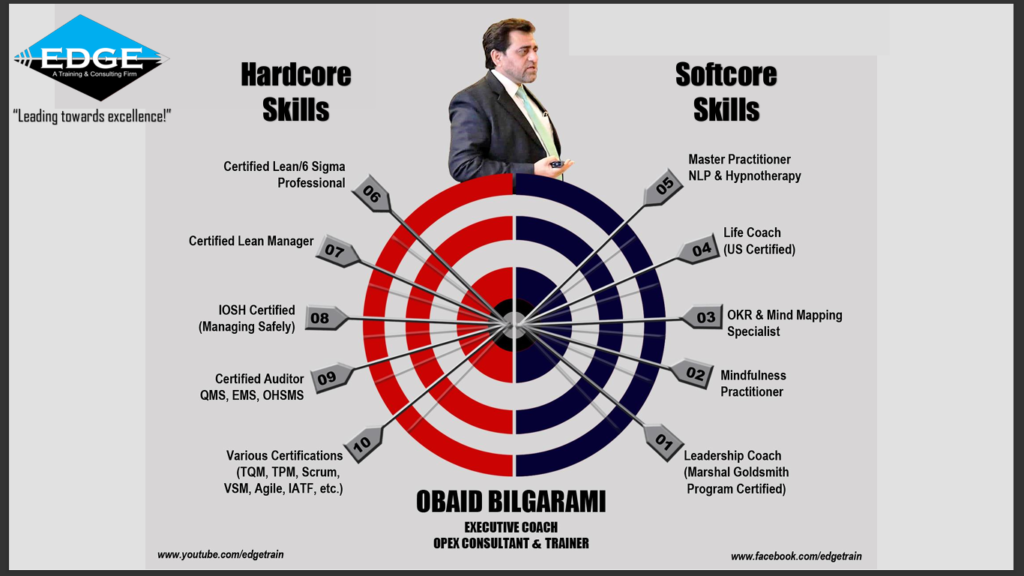
Softcore Skills
- 1.Leadership coach (Marshal Goldsmith Program Certified)
- 2.Mindfulness Practioner
- 3.OKR & Mind Mapping Specialist
- 4.Life Coach (US Certified)
- 5.Master Practitioner NLP & Hypnotherapy


Hardcore Skills
- 6.Certified Lean/6 Sigma Profeeional
- 7.Certified Lean Manager
- IOSH Certified (Managing Safely)
- 9. Certified Auditor QMS, EMS, OHSMS
- 10.Various Certifications (TQM, TPM, Scrum, VSM, Agile, IATF, ETC.)
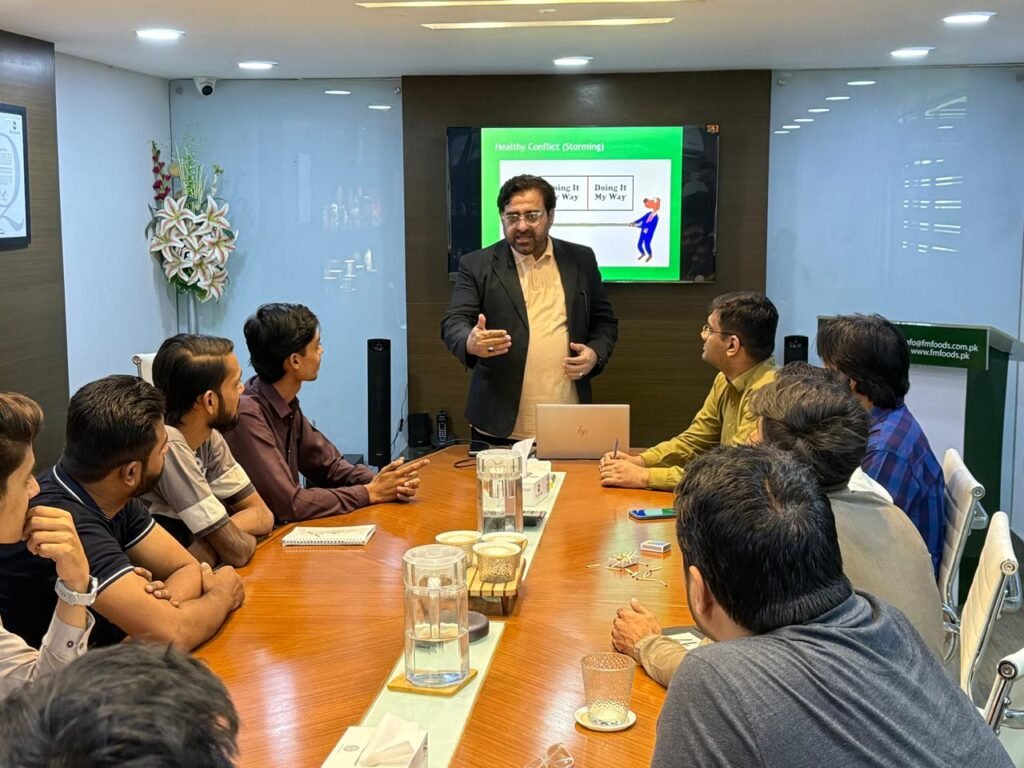
The Art of Conflict Resolution
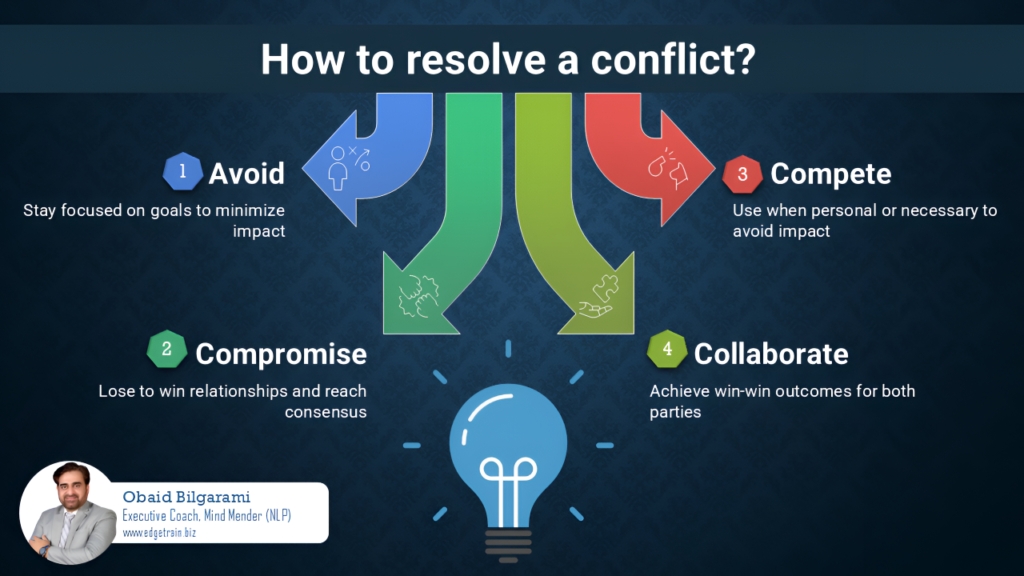
I wouldn’t waste your time defining what conflict is and what the types of conflicts are. What matters to me and you is to to divulge the art of conflict resolution.
Why we need this acumen is essential because conflicts in our lives are inevitable and inescapable. you may encounter contentious situations either at personal, friendly or professional level in life. Our relations are entirely reliant on this skillset as conflict leads to contention, which leads to altercation and eventually bust the relationship chain.
Here is the truth that conflicts can be effectively managed if the discretion is rightly put to the nature and gravity of the conflict. You are going to learn four vital strategies to cope with a conflict out of trivial many in this article which would provide a meticulous discretion to discern the nature and execute the rightful strategy to end it successfully.
The first technique to handle a conflict is to ‘Avoid’ it to the best possible extent. Avoidance helps maintain a relationship and not let it turn sour. And if the relationship is not worthy, then it helps you save your time and energy go down the drain. By avoiding a situation of discord mean you simply accede to what other person’s opinion but without losing yours or simply brush it off your shoulder and engage him or her in any context.
Nevertheless, if the conflict becomes unavoidable, the second strategy is to ‘Collaborate’which implies that you find a point of consensus where both parties agree to their perspective and unitedly move to a direction. The Collaborate approach is a win-win approach to build healthier relations among team, friends or families and sustain synergy toward a common objective.
The third techniques in conflict resolution is ‘Compromise’. This approach works when the other party is all set to lock horns and adopts an unyielding attitude. In this situation, if either you want to carry on in a relation be it personal or professional, the wisdom lies to tilt and accept some terms of the opposing party while persuading for a majority of yours. The Compromise factor is essentially practised at personal and professional level where the opposing party is a part of the tribe you can’t part with.
Sometimes, it is unwise to forego an opposition of opinion when it is likely to create a negative impact in the term or even have tendency to disrupt the current of workflow. In such situations if the opposition in sum amounts to absurdity and baselessness, it must be addressed straight away. there comes the fourth technique, ‘Compete’. Weigh down the opponents viewpoints with your strong stances and firmly step down any anomalous situation before it turns into an anarchy. The techniques is not only aimed to zip the opponent but also zap the argumentative situation.
In a nutshell, conflicts are impartible fragments of life which may raise head anytime. It is the best usage of our discretion with the four underlined techniques to resolve a conflict in an efficacious manner:
- Avoid when the issue is trivial
- Collaborate when the relationship matters
- Compromise when continuity is essential
- Compete when principles or performance are at stake
Conflict does not destroy relationships—poor strategy does. Leaders are not judged by how often they avoid conflict, but by how wisely they choose the right approach. Feel free to raise a query for more understanding to this one of the indispensable leadership skills and do relate your incidence when any of the strategy worked wonder or backfired.
The Neuroscience of Combatting Fear: A Science-Backed Approach to Courage

Fear is an ancient survival mechanism deeply ingrained in our brains. While it once helped us escape predators, today, it often holds us back from personal and professional growth. Neuroscience reveals that fear is primarily governed by the amygdala, a small but powerful part of the brain responsible for processing emotions. Fortunately, we can rewire our response to fear using neuroplasticity—the brain’s ability to reorganize itself through repeated experiences.
Over the years, I have developed a four-step approach to combat fear, inspired by both neuroscience and practical experience. This method not only helps in overcoming fear but also strengthens our resilience and confidence.
1. Familiarize Yourself with What You Fear
Fear thrives in the unknown. When we lack information, our brain fills the gaps with worst-case scenarios, amplifying our anxiety. To counter this, start by studying and understanding what you fear. If public speaking terrifies you, learn about successful speakers, their techniques, and the science behind stage fright. Knowledge reduces uncertainty, and with it, fear.
Neuroscience Insight: Exposure to fearful stimuli in a controlled environment reduces the brain’s stress response over time. This is known as desensitization, where the amygdala learns that the feared object or situation is not actually dangerous.
2. Practice What You Fear
Action is the antidote to fear. Once you have familiarized yourself with your fear, take small, controlled steps toward facing it. If you fear networking events, start by attending small gatherings and gradually work your way up to larger events. Repeated exposure rewires the brain, reducing fear over time.
Neuroscience Insight: The prefrontal cortex, responsible for rational thinking, can override the fear response when we repeatedly expose ourselves to a fear-inducing situation. This is how cognitive-behavioral therapy (CBT) helps individuals overcome phobias.
3. Address the Issue with Yourself and Others
Self-awareness is key to conquering fear. Ask yourself: Why am I afraid? What is the worst that could happen? How rational is my fear? Writing down your fears or discussing them with a trusted friend, mentor, or coach can help diminish their power.
Neuroscience Insight: Verbalizing fears reduces their emotional impact. A study from UCLA found that when people labeled their emotions, the amygdala’s activity decreased, making them feel calmer. Speaking about fear moves it from an emotional reaction to a logical assessment.
4. Reframe Fear as an Opportunity
Fear and excitement trigger similar physiological responses—rapid heartbeat, increased alertness, and a rush of adrenaline. By reframing fear as an opportunity for growth, we can trick our brain into seeing it as a challenge rather than a threat. Instead of saying, I am afraid of failing this presentation, try saying, This is my chance to improve my presentation skills.
Neuroscience Insight: Cognitive reappraisal is a technique that helps the brain reinterpret fear in a positive light. Studies show that people who reframe their anxiety as excitement perform better in stressful situations, from public speaking to sports.
Conclusion: Train Your Brain for Courage
Fear is natural, but it doesn’t have to control you. By familiarizing yourself with what you fear, practicing in small steps, addressing your fears openly, and reframing them as opportunities, you can rewire your brain for resilience. Neuroscience proves that courage isn’t an inborn trait—it’s a skill that can be developed.
So, what fear will you face today?
#FearlessMind #Neuroscience #PersonalDevelopment #Leadership #GrowthMindset